
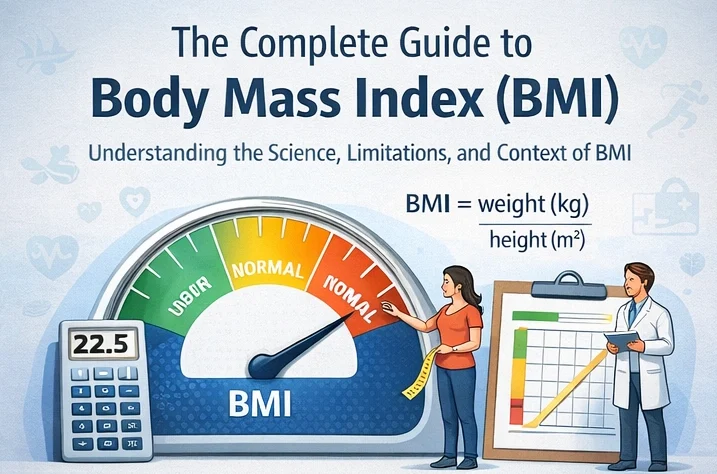
Body Mass Index (BMI) is arguably the most widely recognized yet frequently misunderstood health metric in modern medicine. Whether you’re visiting your doctor, signing up for a gym membership, applying for life insurance, or simply browsing health websites, you’ll likely encounter this three-letter acronym. But behind this seemingly simple number lies a complex story of public health policy, scientific debate, and individual health assessment.
The Origins and Evolution of BMI
The story of BMI begins not with modern medicine, but with a 19th-century Belgian mathematician named Adolphe Quetelet. In the 1830s, Quetelet was attempting to define the characteristics of the “average man” through statistical analysis. He developed what he called the “Quetelet Index,” a mathematical formula relating weight to height. Interestingly, Quetelet never intended his formula to be used for individual health assessment—he was conducting population studies and seeking patterns across large groups.
The formula remained relatively obscure until the 1970s when American physiologist Ancel Keys resurrected it, renaming it the Body Mass Index. Keys and his colleagues studied over 7,400 men across five countries and concluded that this simple calculation was a reasonably good proxy for body fatness. Since then, BMI has become the standard tool for classifying weight status in clinical practice, public health research, and epidemiological studies worldwide.

BMI Calculator
Calculate your Body Mass Index
Your BMI
Normal: 18.5 – 24.9
Overweight: 25 – 29.9
Obese: ≥ 30
Understanding the BMI Categories
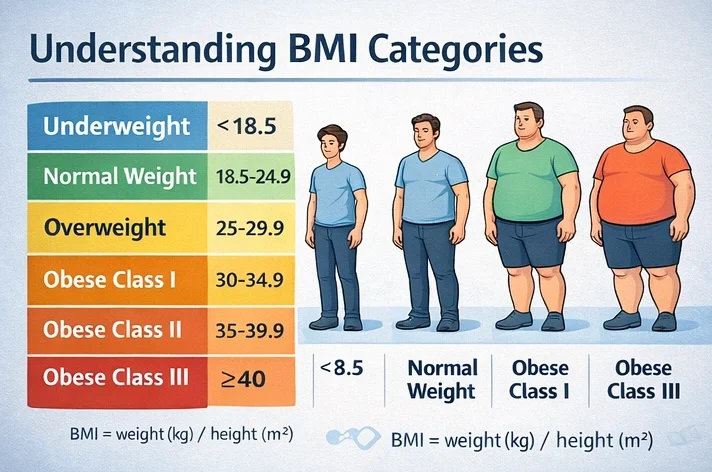
The World Health Organization established the most widely used BMI classification system:
Underweight: BMI below 18.5
- Severe thinness: below 16
- Moderate thinness: 16-16.9
- Mild thinness: 17-18.4
Normal weight: BMI 18.5-24.9
Overweight: BMI 25-29.9
- Pre-obese: 25-29.9
Obese: BMI 30 and above
- Class I obesity: 30-34.9
- Class II obesity: 35-39.9
- Class III obesity: 40 and above (sometimes called severe or morbid obesity)
These cutoff points weren’t chosen arbitrarily. They’re based on observed relationships between BMI ranges and health outcomes across large populations, particularly the risk of developing weight-related diseases and mortality rates.
The Mathematics Behind BMI
At its core, BMI is elegantly simple. The formula takes your weight and divides it by the square of your height:
BMI = weight (kilograms) / height (meters)²
For those using imperial measurements:
BMI = (weight in pounds / height in inches²) × 703
Let’s walk through an example. Imagine someone who weighs 70 kilograms (about 154 pounds) and stands 1.75 meters tall (about 5 feet 9 inches):
BMI = 70 / (1.75)² = 70 / 3.06 = 22.9
This places them in the “normal weight” category.
Why Healthcare Providers Use BMI
Despite its limitations (which we’ll explore extensively), BMI remains popular in clinical and public health settings for several compelling reasons:
Simplicity and Accessibility: BMI requires only a scale and a measuring tape. No expensive equipment, no specialized training, no laboratory tests. This makes it practical for use anywhere in the world, from high-tech hospitals to rural clinics in developing nations.
Population-Level Predictions: When applied to large groups, BMI correlates reasonably well with body fat percentage and health risks. This makes it valuable for public health surveillance, tracking obesity trends, and identifying at-risk populations.
Extensive Research Base: Decades of epidemiological studies have used BMI as a measure, creating a vast body of research that allows for comparisons across time and populations. This historical continuity has value, even if newer metrics might be more accurate.
Standardization: Healthcare providers worldwide understand BMI categories, facilitating communication and consistency in medical records, research papers, and health guidelines.
The Health Correlations: What Does BMI Actually Predict?
Research has established clear associations between BMI categories and various health outcomes, though it’s crucial to remember that correlation doesn’t equal causation, and population trends don’t necessarily apply to individuals.
Cardiovascular Disease: Multiple large-scale studies have found that people with BMIs in the obese range face elevated risks of heart disease, hypertension, and stroke. The famous Framingham Heart Study and the Nurses’ Health Study both demonstrated these relationships across thousands of participants over decades.
Type 2 Diabetes: Perhaps one of the strongest BMI-related associations exists with diabetes. Research consistently shows that higher BMI correlates with increased insulin resistance and diabetes risk. Even modest weight loss in people with elevated BMIs can significantly improve blood sugar control.
Certain Cancers: Epidemiological evidence links higher BMI to increased risks of several cancers, including breast cancer (particularly after menopause), colon cancer, kidney cancer, and pancreatic cancer. The mechanisms likely involve inflammation, hormone changes, and metabolic factors.
Mortality Rates: This relationship is more complex than once thought. Earlier research suggested a J-shaped or U-shaped curve, where both very low and very high BMIs associated with increased mortality risk. However, more recent analyses accounting for factors like smoking and pre-existing illness show more nuanced patterns, with the “optimal” BMI for longevity potentially varying by age and other factors.
Mental Health: The relationship between BMI and mental health is bidirectional and complicated. Weight stigma, discrimination, and societal pressures can contribute to depression and anxiety in people with higher BMIs. Simultaneously, certain mental health conditions and medications can affect weight.
The Fundamental Limitations of BMI
While BMI serves certain purposes, it has significant shortcomings that have led many health experts to advocate for more comprehensive assessment tools.
The Muscle-Fat Problem
BMI cannot distinguish between lean muscle mass and body fat. This creates obvious issues for athletes, bodybuilders, and highly active individuals. A professional rugby player or Olympic weightlifter might have a BMI of 30 or higher—technically “obese”—while having body fat percentages in the low teens. Their elevated weight comes from muscle, bone density, and cardiovascular conditioning, not excess fat.
Conversely, someone with a “normal” BMI might actually have high body fat percentage and low muscle mass—a condition sometimes called “normal weight obesity” or being “skinny fat.” These individuals may face metabolic health risks despite their reassuring BMI number.
Body Composition Variations
Human bodies are remarkably diverse. Two people with identical BMIs might have vastly different body compositions. Factors affecting this include:
- Age: As we age, we typically lose muscle mass and gain fat, even if weight remains stable
- Sex: Women naturally have higher essential body fat percentages than men
- Genetics: Some ethnic groups have different body compositions at the same BMI
- Physical activity levels: Regular exercise builds muscle and changes body composition
Fat Distribution Matters
Not all body fat poses equal health risks. Visceral fat—the fat surrounding internal organs in the abdominal cavity—is metabolically active and particularly problematic for health. Subcutaneous fat—the fat just under the skin—is generally less concerning. Someone carrying weight primarily in their hips and thighs (pear-shaped) faces different health implications than someone carrying it in their abdomen (apple-shaped), even at identical BMIs.
This is why waist circumference and waist-to-hip ratio have emerged as important complementary measurements. Waist circumference above 40 inches (102 cm) in men or 35 inches (88 cm) in women indicates increased health risk, regardless of BMI.
The Ethnic Background Factor
The standard BMI categories were developed primarily using data from European and European-descent populations. Research has increasingly shown that different ethnic groups experience health risks at different BMI levels.
Asian Populations: Studies consistently demonstrate that Asian populations experience increased health risks at lower BMI levels than Europeans. The WHO recommends considering different BMI cutoffs for Asian populations: 23-27.5 for overweight and ≥27.5 for obese. This reflects differences in body composition and fat distribution patterns.
Pacific Islander Populations: Conversely, many Pacific Islander groups have higher average muscle mass and bone density, potentially making standard BMI categories less applicable.
African-Descent Populations: Research suggests complex patterns here, with some studies showing higher muscle mass on average, which could affect BMI interpretation.
These differences underscore that one-size-fits-all BMI categories may not serve all populations equally well.
Life Stage Considerations
BMI’s meaning shifts across the lifespan:
Children and Adolescents: BMI for young people requires age- and sex-specific percentile charts because normal body composition changes dramatically during growth and development. A BMI that’s healthy for a 5-year-old would be concerning for a 15-year-old, and vice versa.
Older Adults: The “obesity paradox” refers to research showing that slightly elevated BMIs (in the overweight range) may actually be protective for adults over 65. This could relate to having reserves during illness, or might reflect methodological issues in the research. The optimal BMI range likely shifts upward somewhat with age.
Pregnancy: BMI helps guide appropriate weight gain during pregnancy, but pregnancy itself temporarily makes BMI calculations less meaningful.
Beyond BMI: Alternative and Complementary Measurements
Recognizing BMI’s limitations, researchers and clinicians have developed numerous alternative approaches:
Body Fat Percentage
This directly measures what BMI estimates indirectly. Methods include:
- DEXA Scans: Dual-energy X-ray absorptiometry provides the gold standard for body composition analysis, showing bone density, lean mass, and fat mass distribution
- Bioelectrical Impedance: The technology in many home scales and gym assessments; less accurate but more accessible
- Skinfold Calipers: Trained practitioners measure subcutaneous fat at specific sites; inexpensive but requires skill
- Hydrostatic Weighing: The underwater weighing method based on body density principles; accurate but impractical for routine use
Healthy body fat ranges vary by sex and age, but generally:
- Men: 10-20% (athletes: 6-13%)
- Women: 18-28% (athletes: 14-20%)
Waist-to-Hip Ratio
This simple measurement provides insight into fat distribution:
WHR = waist circumference / hip circumference
Higher ratios indicate more abdominal fat. Health risks increase when:
- Men: WHR > 0.90
- Women: WHR > 0.85
Waist-to-Height Ratio
An emerging metric gaining research support suggests your waist circumference should be less than half your height. This simple rule—”keep your waist circumference to less than half your height”—appears to predict cardiovascular risk across diverse populations and age groups.
Metabolic Health Markers
Perhaps most important are actual health indicators:
- Blood pressure
- Fasting glucose and HbA1c (long-term blood sugar control)
- Lipid panel (cholesterol and triglycerides)
- Inflammatory markers like C-reactive protein
- Liver function tests
- Insulin sensitivity measures
Someone with a high BMI but excellent metabolic markers may be healthier than someone with a normal BMI but poor metabolic health—a concept called “metabolically healthy obesity.”
The Psychology and Sociology of BMI
BMI exists not just as a medical tool but as a cultural force that shapes how people think about their bodies and health.
Weight Stigma and Discrimination
High BMI often leads to stigmatization in healthcare, employment, education, and social settings. Research shows that:
- People with obesity report experiencing discrimination comparable to rates seen with racial discrimination
- Weight bias exists even among healthcare providers, potentially affecting quality of care
- Media representations often perpetuate negative stereotypes about people with higher BMIs
This stigma itself becomes a health issue, contributing to stress, avoidance of healthcare, and mental health challenges.
The Eating Disorder Connection
For individuals with or recovering from eating disorders, BMI can be triggering or unhelpful. The focus on numbers and categories may reinforce disordered thinking patterns. Many eating disorder treatment programs intentionally avoid discussing BMI with patients, focusing instead on intuitive eating, body respect, and overall health behaviors.
Health at Every Size Movement
This paradigm shift in approaching weight and health emphasizes:
- Pursuing health-promoting behaviors regardless of weight
- Rejecting weight loss as a primary health goal
- Respecting body diversity
- Focusing on sustainable, enjoyable physical activity and balanced eating
Proponents argue that weight cycling (repeated loss and regain), weight stigma, and unhealthy weight loss attempts cause more harm than maintaining a higher stable weight while adopting healthy behaviors.
BMI in Clinical Practice: How Doctors Use It
Healthcare providers typically use BMI as a screening tool, not a diagnostic one. In a well-conducted medical appointment:
- Initial Assessment: BMI provides a quick snapshot that might prompt further investigation
- Comprehensive Evaluation: The doctor considers family history, medical history, physical examination, and laboratory tests
- Individual Context: Factors like muscle mass, fitness level, and where weight is carried get incorporated
- Risk Stratification: BMI combines with other factors to assess cardiovascular and metabolic risk
- Treatment Decisions: Interventions get tailored to the individual’s health status, not just their BMI category
Responsible clinicians recognize that BMI is a starting point for conversation, not a verdict on someone’s health or worth.
Making BMI Work for You
If you choose to use BMI as one tool for monitoring your health, here’s how to do it thoughtfully:
Calculate Accurately
Use precise measurements. Weight yourself at the same time of day, ideally in the morning before eating. Measure height accurately against a wall, standing straight with heels together.
Track Trends, Not Single Points
One BMI measurement means little. Changes over time provide more useful information. Are you gradually moving in a direction that concerns you? Has your BMI been stable despite lifestyle changes?
Contextualize the Number
Consider:
- How you feel physically
- Your energy levels and stamina
- Whether you can do activities you enjoy
- Your strength and fitness improvements
- How your clothes fit
- Your actual health markers from blood tests
Avoid Obsession
Checking BMI excessively or letting it dominate your self-perception becomes counterproductive. For most people, assessing BMI every few months as part of a broader health check-in is sufficient.
Seek Professional Guidance
If you have concerns about your weight or health, consult healthcare providers who take a comprehensive, compassionate approach rather than focusing solely on BMI.
The Future of Body Weight Assessment
Healthcare is moving toward more personalized, multifaceted approaches to assessing health:
Precision Medicine: Genetic testing may eventually help determine individual optimal weight ranges and health risks based on personal genetic profiles.
Advanced Imaging: As technology becomes more affordable, direct body composition analysis through DEXA or MRI might replace simple height-weight calculations.
Metabolic Health Focus: Shifting emphasis from weight to metabolic health markers recognizes that health exists in diverse body sizes.
Wearable Technology: Devices tracking activity, sleep, heart rate variability, and other real-time health data provide dynamic health pictures that static BMI measurements cannot.
AI and Machine Learning: Algorithms might eventually integrate multiple variables—BMI, waist circumference, body composition, genetics, lifestyle factors, and biomarkers—to provide truly personalized health risk assessments.
The Bottom Line: A Balanced Perspective on BMI
Body Mass Index is neither worthless nor definitive. It’s a screening tool with genuine utility for population health and clinical starting points, but significant limitations for individual assessment. The number cannot capture the complexity of human health, the diversity of healthy bodies, or the multiple dimensions of wellness.
Your BMI might provide one piece of useful information, but it should never define your worth, dictate your self-esteem, or solely determine your health status. True health encompasses physical fitness, mental wellbeing, social connections, purposeful living, and the ability to do things you value—none of which a simple calculation can measure.
If you’re concerned about your health, the most productive approach involves working with knowledgeable, compassionate healthcare providers who see you as a whole person, not a number. Focus on sustainable healthy behaviors—regular movement you enjoy, balanced nutrition that nourishes your body, adequate sleep, stress management, and meaningful social connections. These practices improve health across all BMI categories.
Remember that bodies are diverse, health is multidimensional, and you deserve respectful, comprehensive healthcare regardless of what any scale says.